


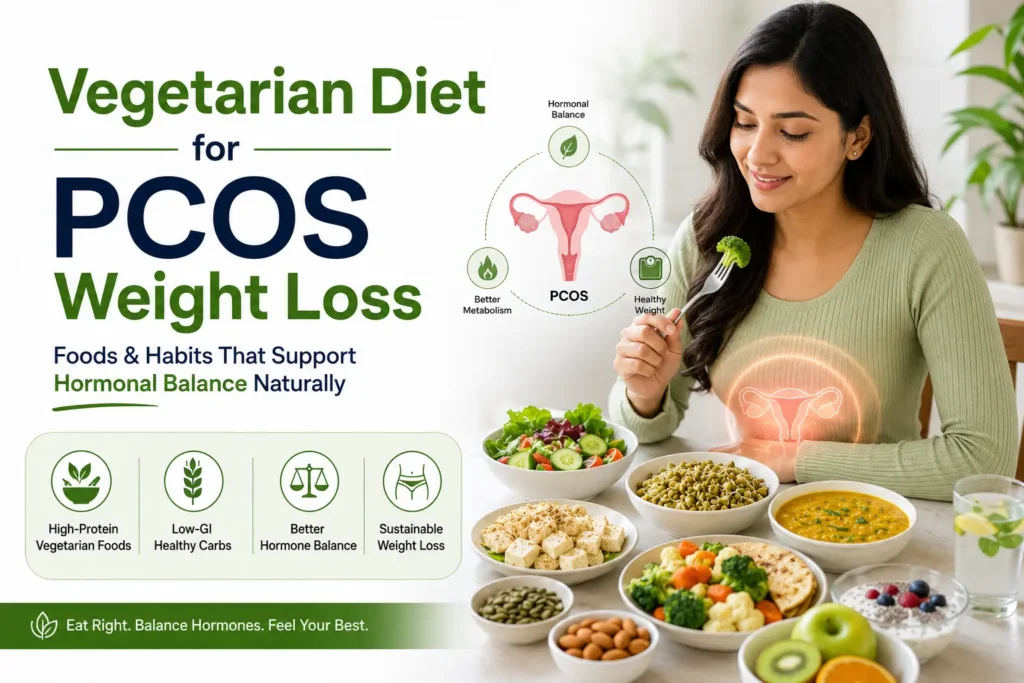
PCOS (Polycystic Ovary Syndrome) is one of the most common hormonal disorders affecting women of reproductive age. It can lead to irregular periods, weight gain, acne, hair fall, excessive facial hair growth, insulin resistance, and fertility challenges. One of the biggest concerns for many women with PCOS is weight management. Despite following diets and exercise routines, losing weight often feels much harder than expected.
The reason lies in the hormonal and metabolic changes associated with PCOS. Many women develop insulin resistance, which makes the body store more fat and increases cravings for sugary and high-calorie foods.
The good news is that nutrition can play a powerful role in managing PCOS symptoms. A well-balanced vegetarian diet rich in protein, fiber, healthy fats, and low-glycemic carbohydrates can help improve insulin sensitivity, support hormone balance, reduce inflammation, and promote sustainable weight loss.
As a Registered Dietitian and PhD (AIIMS & Delhi University), Dr. Charu Arora helps women with PCOS develop personalized nutrition plans that address the root causes of hormonal imbalance while supporting long-term health and fertility.
PCOS is a hormonal condition that affects how the ovaries function. Women with PCOS often have elevated androgen levels and insulin resistance.
When insulin levels remain high:
This creates a cycle where excess weight worsens insulin resistance and hormonal symptoms, making it harder to achieve a healthy weight.
Yes. A carefully planned vegetarian diet can be highly effective for women with PCOS.
Benefits include:
The key is focusing on nutrient-dense foods rather than processed vegetarian foods that are high in sugar and refined carbohydrates.
Protein helps control hunger, supports muscle maintenance, and improves satiety.
Include:
Fiber slows digestion and supports stable blood sugar levels.
Choose:
Healthy fats help support hormone production and reduce cravings.
Good choices include:
Women with PCOS can enjoy fruits while focusing on portion control.
Best options include:

Early Morning
Breakfast
Mid-Morning Snack
Lunch
Evening Snack
Dinner
Bedtime
Early Morning
Breakfast
Mid-Morning Snack
Lunch
Evening Snack
Dinner
Bedtime
Early Morning
Breakfast
Mid-Morning Snack
Lunch
Evening Snack
Dinner
Bedtime
Early Morning
Breakfast
Mid-Morning Snack
Lunch
Evening Snack
Dinner
Bedtime
Early Morning
Breakfast
Mid-Morning Snack
Lunch
Evening Snack
Dinner
Bedtime
Early Morning
Breakfast
Mid-Morning Snack
Lunch
Evening Snack
Dinner
Bedtime
Early Morning
Breakfast
Mid-Morning Snack
Lunch
Evening Snack
Dinner
Bedtime

Transform your health and lifestyle with expert nutritional care by Dr. Charu Arora at the Best Diet & Wellness Clinic
Certain foods may worsen insulin resistance and inflammation.
Limit or avoid:
Replacing these foods with whole, minimally processed alternatives can help improve metabolic health.
Rich in fiber and omega-3 fatty acids.
Support satiety and digestive health.
May help support healthy blood sugar regulation.
Traditionally used to support metabolic wellness.
Provides antioxidants and vitamin C.
Contain zinc and magnesium, which are important for overall health.
Skipping breakfast may increase cravings and overeating later in the day.
Low protein intake can increase hunger and reduce satiety.
While fruits are nutritious, pairing them with protein or healthy fats helps support blood sugar control.
Repeated overeating can delay progress and make weight management more difficult.
Hydration plays an important role in metabolism and overall well-being.
Protein requirements vary depending on age, body weight, physical activity, and health goals.
Including protein at every meal can help:
A registered dietitian can help determine your specific protein needs.
Aim for a combination of:
Sleep deprivation can negatively affect insulin sensitivity and hunger hormones.
Aim for 7–8 hours of quality sleep every night.
Stress can worsen hormonal imbalances and increase emotional eating.
Helpful strategies include:
Adequate water intake supports digestion and metabolic health.
Professional guidance may be helpful if you experience:
- Difficulty losing weight
- Irregular periods
- Insulin resistance
- Persistent cravings
- Fertility concerns
- Repeated dieting failures
A personalized nutrition plan can address your unique symptoms, goals, and lifestyle.
Dr. Charu Arora is a PhD (AIIMS & Delhi University) and Registered Dietitian specializing in:
Her evidence-based approach focuses on sustainable lifestyle changes rather than restrictive dieting, helping women improve metabolic health and long-term wellness.
A diet rich in protein, fiber, vegetables, healthy fats, and low-glycemic carbohydrates is generally beneficial for women with PCOS.
Apples, pears, guava, kiwi, oranges, pomegranate, and berries are good options.
Yes. Portion control is important. Pair rice with vegetables and protein to support better blood sugar control.
Even modest weight loss may help improve insulin sensitivity, menstrual regularity, and overall metabolic health.